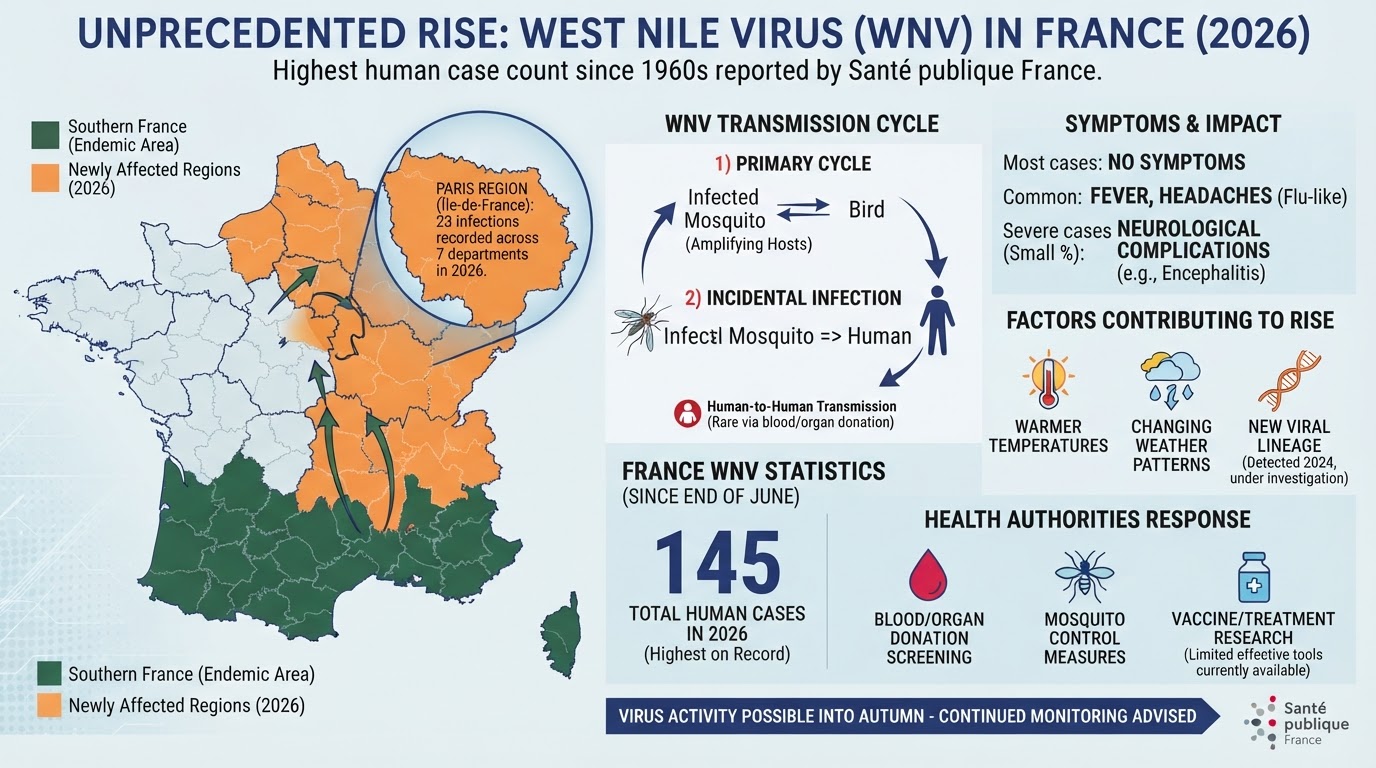
France is facing an unprecedented rise in West Nile virus infections, with health authorities reporting 145 human cases since the end of June.
The figure is the highest recorded in the country since West Nile virus was first detected in France in the 1960s, according to Santé publique France data reported by Le Monde.
West Nile virus is mainly transmitted to humans through the bites of infected mosquitoes. The virus normally circulates between mosquitoes and birds, with humans becoming infected when bitten by a mosquito carrying the virus.
Health experts say the spread of the virus has expanded beyond areas in southern France. Cases have also been detected in the Paris region, where 23 infections have been recorded across seven departments during 2026.
Most people infected with West Nile virus do not develop noticeable symptoms. However, some patients can experience fever, headaches and other flu-like symptoms. A small proportion can develop serious neurological complications.
The rise in cases has been linked by researchers to conditions that can favour mosquito populations and transmission, including warmer temperatures and changing weather patterns. A new viral lineage detected in 2024 may also be contributing, although researchers say its role is still being investigated.
France is also monitoring the potential implications for blood and organ donations because the virus can, in some circumstances, be transmitted through these routes.
Researchers are working on possible vaccines and antiviral treatments, but effective medical tools against West Nile virus remain limited.
Health authorities are continuing to monitor the situation as mosquito activity remains possible into the autumn.