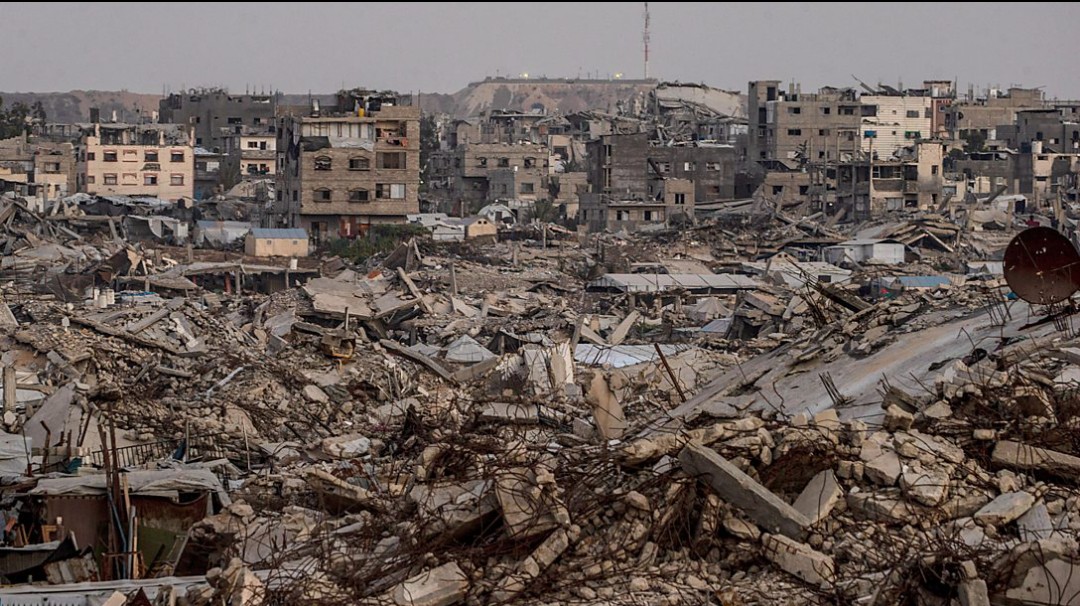
Israeli military strikes have continued in parts of Gaza nearly a year after a ceasefire agreement came into effect, with the violence remaining a major challenge to the fragile truce.
The ceasefire began on 10 October 2025 and brought an end to much of the large-scale fighting. However, Israeli forces have continued carrying out strikes, while Israel says it is targeting Hamas militants and accuses the group of violating the ceasefire.
According to figures from Gaza's Hamas-run health ministry cited by Reuters, more than 1,400 Palestinians have been killed since the ceasefire began. The figures are not independently verified by Reuters.
The continuing violence has also raised concerns about independent reporting from Gaza.
Foreign journalists have remained unable to enter Gaza independently to report from inside the territory. International media organisations and press freedom groups have repeatedly called on Israel to allow independent access for foreign reporters.
As a result, much of the reporting from inside Gaza is being carried out by Palestinian journalists who remain in the territory. International correspondents working from Jerusalem rely heavily on their local colleagues, eyewitness accounts, photographs, videos and other independently verifiable material.
The restrictions have become a significant issue for international media organisations. In April, major media groups called on Israel to lift the restrictions on independent foreign reporting, arguing that journalists need direct access to verify events and speak with civilians.
The UK government has also called for journalists to be allowed access to Gaza, saying that independent reporting would help establish what is happening on the ground as the ceasefire approaches its first anniversary.
Meanwhile, Palestinian journalists continue to report from within Gaza despite the risks. The International Federation of Journalists says hundreds of journalists and media workers have been killed, injured, detained or displaced during the conflict.
The continuing strikes and restrictions on independent media access mean that the situation in Gaza remains difficult to verify from outside the territory, with international news organisations relying on a combination of local reporting, satellite imagery, videos and other forms of evidence.