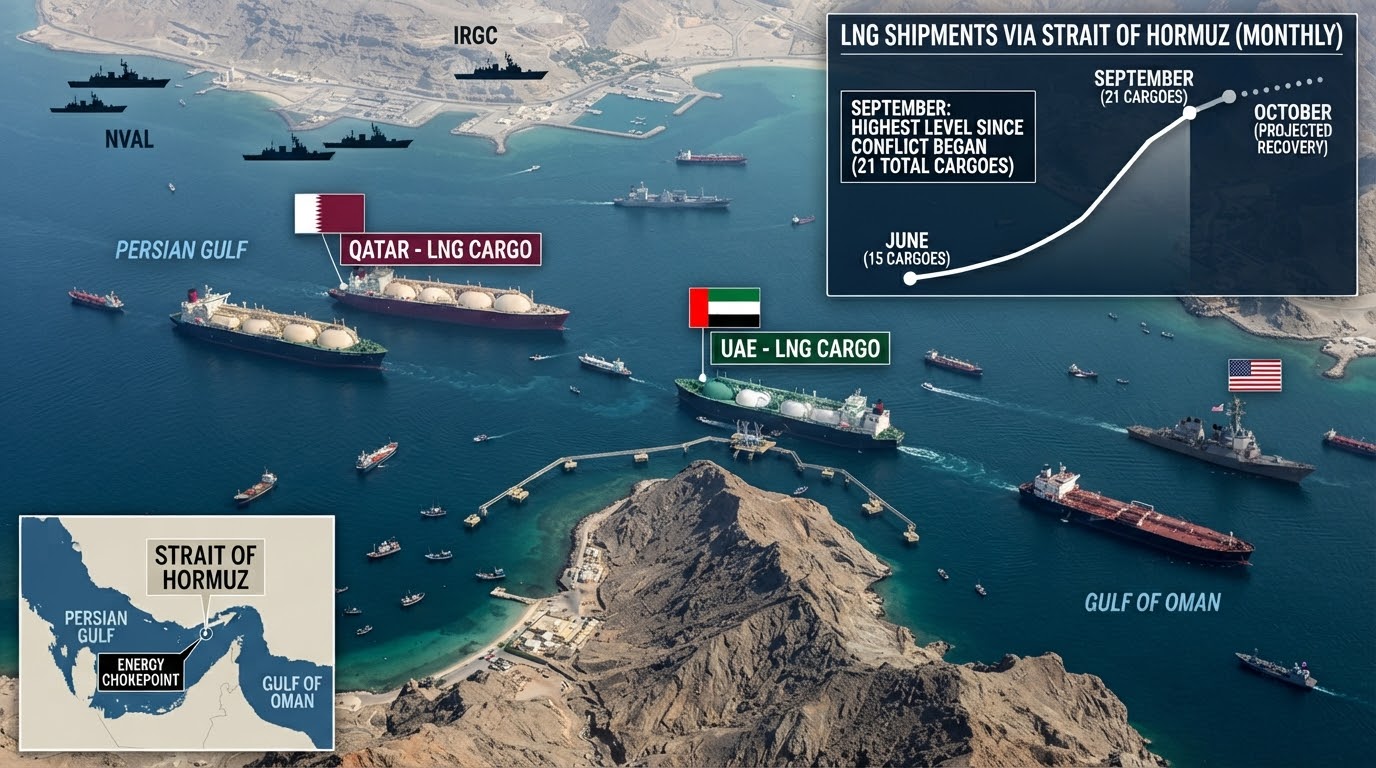
The number of liquefied natural gas shipments travelling through the Strait of Hormuz increased significantly in September, reaching the highest monthly level recorded since the conflict involving the United States, Israel and Iran began.
Data from S&P Global Energy showed that 19 LNG cargoes passed through the strategic waterway during the month. Thirteen of those shipments came from Qatar, while six originated from the United Arab Emirates.
Kpler's figures put the total even higher, at 21 cargoes for September, compared with 15 in June.
The increase indicates that some LNG shipping activity is gradually returning despite continued security concerns around the Strait of Hormuz.
Analysts said LNG traffic accelerated during the second half of September. If the trend continues through October, shipments could recover to around a quarter of their pre-war level, according to S&P Global Energy.
Several Qatar-linked LNG vessels have recently been detected travelling through or emerging from the waterway after weeks of limited visible activity.
Some ships have also disappeared from tracking systems before later appearing outside the Gulf. Analysts say this may be linked to vessels switching off their Automatic Identification System transponders during high-risk crossings.
Despite the September recovery, LNG traffic remains far below the levels seen before the war.
The Strait of Hormuz is one of the world's most important energy routes. Before the conflict, it carried roughly one-fifth of global crude oil and LNG supplies.
The continued security risks mean uncertainty remains over whether LNG shipments can maintain their recent recovery, particularly as countries prepare for increased energy demand during the winter.
Analysts are also monitoring the possibility of further military escalation and the cost and availability of naval escorts for commercial vessels using the waterway.